09 Dec 2025
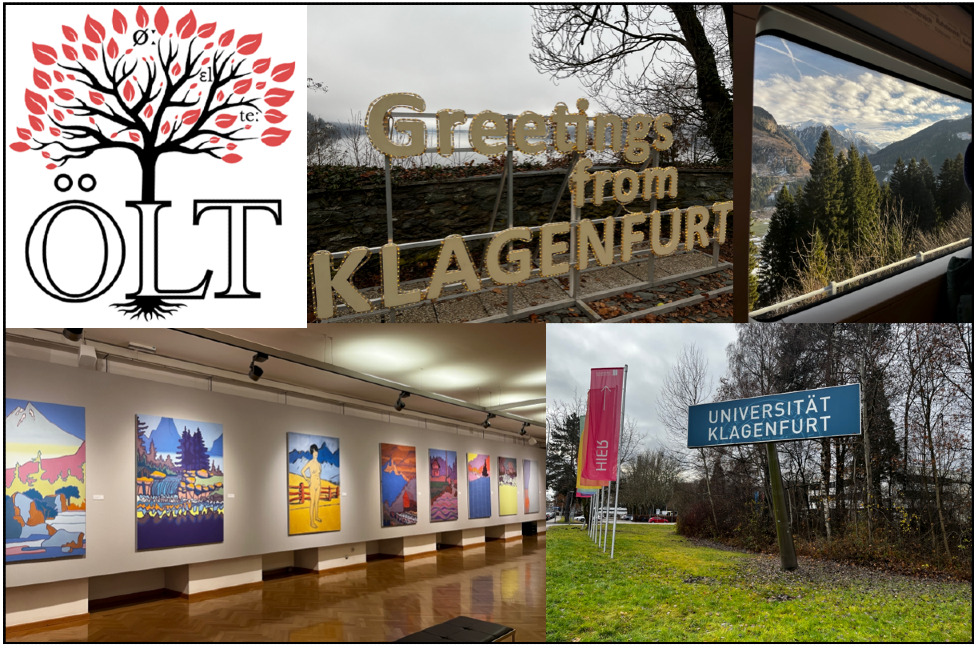
The 49th Austrian Linguistics Conference took place at the University of Klagenfurt and featured
the phonetics workshop „Laute von allen Seiten: Phonetik und ihre Teilbereiche als transdiszplinäres Interessensfeld“
where we presented and discussed our work-in-progress on question intonation in Bulgarian Judeo-Spanish.
We thank the organizers Nathalie Elsässer, Hendrik Behrens-Zemek, Jan Luttenberger (ISF Austrian Academy of Sciences), Dragana Rakocevic (University of Graz), and Lukas Nemestothy (University of Vienna) for putting together a highly varied program and for fostering a very pleasant atmosphere of exchange.
I would like to highlight the plenary talk by Brigitta Busch (University of Vienna) entitled Hinhören! Poslušajmo. Slowenisch sprechen in Kärnten. Govoriti slovensko na Koroškem, which discussed the historically multilingual region of Kärnten/Koroška.
The talk explained how confronting suppressed history and focusing on people’s lived emotional experiences of language can support a new and more open process of reclaiming Slovene in the region today.
20 Oct 2025
Most voice assistants still sound female – even when designed to be neutral? 🤔
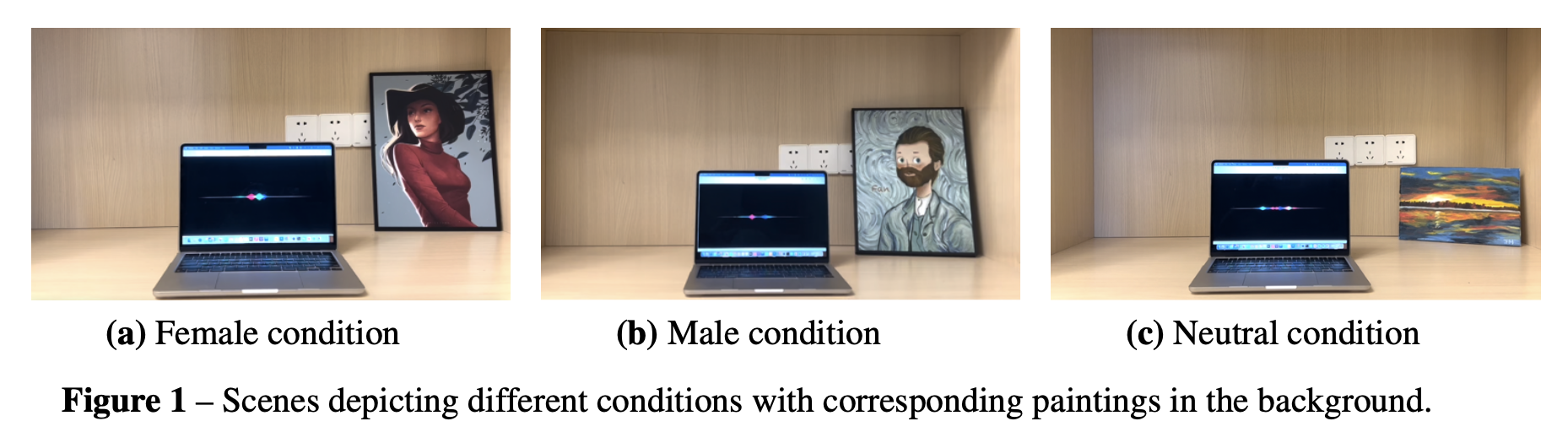
In our new study, The Influence of Visual Context on the Perception of Voice Assistant Gender, we explored how people perceive Apple Siri’s gender-neutral voice Quinn.
We found that listeners tended to rate Quinn as more female-sounding – especially when a female portrait was shown at the same time (see Figure 1a). This confirms that what we see 👀 can strongly influence what we hear 👂, even if it is unrelated to the task at hand.
Designing truly gender-neutral voice assistants isn’t just about the sound itself — our expectations and the visual context play a powerful role too.
We had the pleasure of presenting this work at P&P 2024 in Halle, Germany. Read the full paper in the proceedings (pp. 55-63). #openaccess 🔓
08 Oct 2025
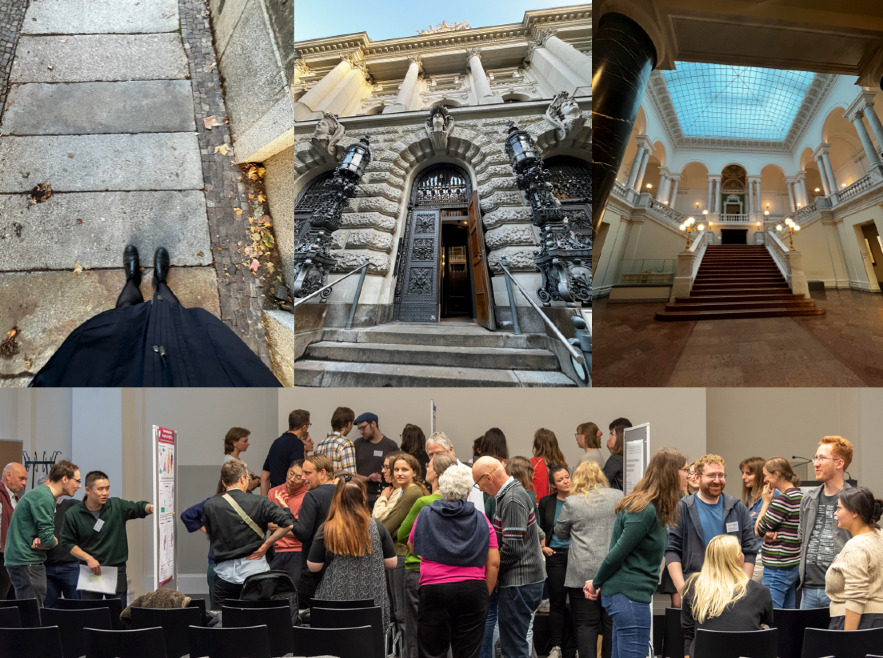
This year’s P&P conference took place at the beautiful Leipzig University Library, Bibliotheca Albertina.
A great opportunity to discuss our work on Question Intonation in Bilingual Speakers of Bulgarian and Judeo-Spanish
with the vibrant community of phoneticians and phonologists from the DACH+ region.
28 Jun 2025
I am delighted to share that our article Exploring the Relationship Between Mental Boundary Strength
and Phonetic Accommodation is now published in Language and Speech. 🥂 🍾
The article is available online. #openaccess 🔓
📖 In this study, we explore whether individuals with thinner mental boundaries are more likely to phonetically adapt to their conversation partners. Our results suggest that speakers may accommodate to different types of phonetic features depending on their personality structure.
👀 We look forward to further research investigating how individual personality differences influence accommodation behaviour — for example, using the German Boundary Questionnaire version we provided.
01 Apr 2025
After three fabulous years with ADAPT in Dublin 💚, I am happy to share that I am starting a new postdoc position at
Johannes Gutenberg University (JGU) Mainz and Saarland University, Saarbrücken.
I will investigate the intonational phonology of Judeo-Spanish varieties spoken in Bulgaria 🇧🇬
with Prof. Christoph Gabriel, Prof. Bistra Andreeva, and Prof. Jonas Grünke.
Judeo-Spanish, also known as Ladino, is a heritage language spoken by the descendants of the
Sephardic Jews who were expelled in 1492 from the Iberian Peninsula.
One main area of settlement was the Ottoman Empire and its successor states such as Turkey, Greece, Serbia, and Bulgaria.
Today, fewer than 30 Sephardim living in Bulgaria can still be considered native speakers of Bulgarian Judeo‑Spanish, making this research project an essential endeavor to preserve this important cultural heritage.