01 Jul 2026
Are you heading to the University of Bremen to attend the
ACM Conference on Conversational User Interfaces at the end of this month? 🫏 🐕 🐈 🐓
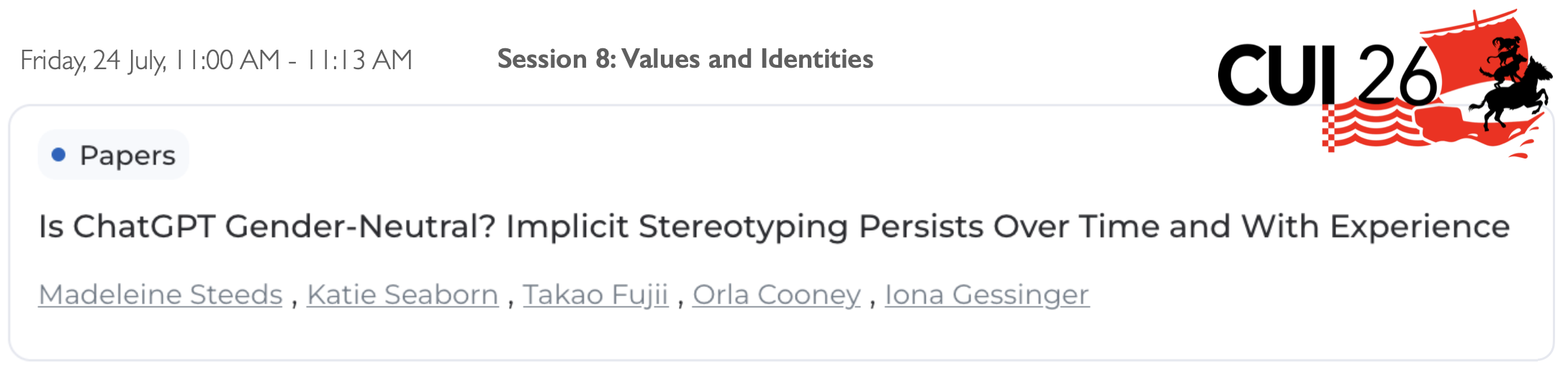
Join our talk as we explore how users with different levels of experience perceive ChatGPT’s gender.
30 May 2026
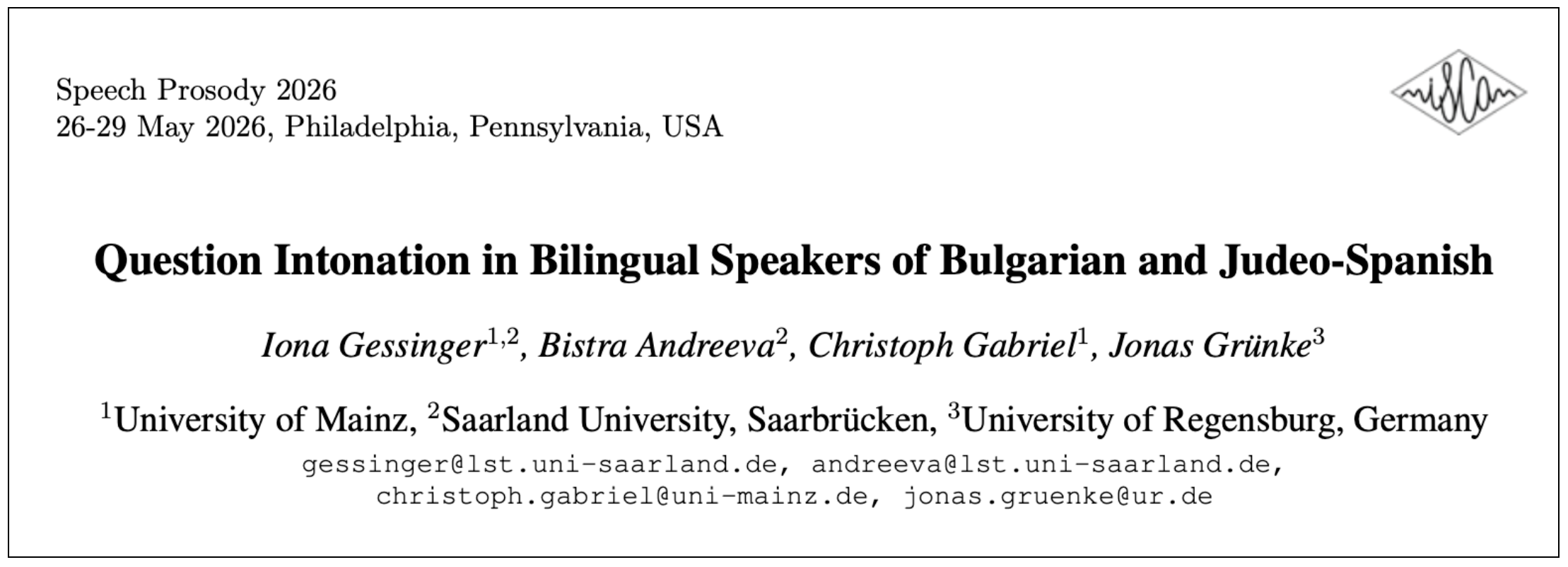
We presented our research on question intonation in heritage speakers of Judeo-Spanish in Bulgaria (mean age: 81 years) at the 13th International Conference on Speech Prosody, hosted by the University of Pennsylvania in Philadelphia, USA. The full paper is available in the ISCA archive.
22 May 2026
What happens when science, technology, art, and society inspire one another?
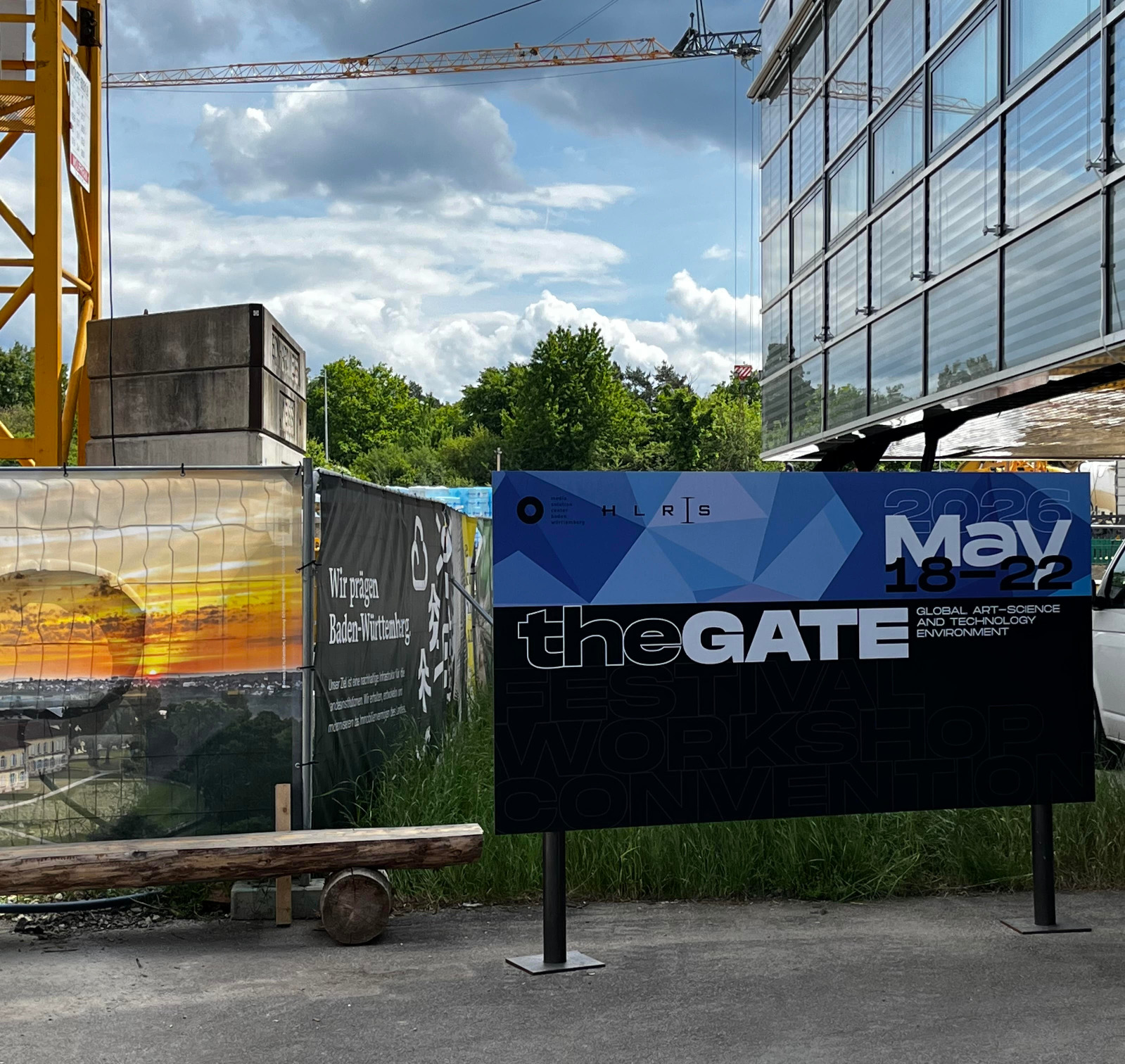
theGATE is an initiative exploring exactly these intersections. From May 18–22, the High Performance Computing Center Stuttgart (HLRS) opened its doors for thought-provoking conversations, and I was delighted to join the festival’s eCulture Convention.
There was much to take away. From discussions about how physics can inspire art and how art can help us imagine what physics struggles to describe, to reflections on how we visualise phenomena that are impossible to see with the naked eye and that challenge the way we understand reality. From rethinking AI as African Intelligence, to conversations about why digital sovereignty and resilience matter for the future of knowledge. From digital monasteries and supercomputers in churches, to the computational pain experienced by cooling systems.
What stayed with me most was the atmosphere of curiosity, the sense that innovation does not only happen through faster machines or better algorithms, but also through dialogue, imagination, and the courage to ask unexpected questions.
04 Feb 2026
I presented our work on Tracing Phonetic Features in Automatic Speech Recognition Models
in the joint colloqium of the phonetics and corpus linguistics groups at Humboldt University of Berlin.
Thank you for hosting me, Tine Mooshammer, Malte Belz,
and Sarah Wesolek!
The talk was based on our Interspeech 2024 paper, where we used ASR to examine coarticulation, and our recent Computer, Speech & Language paper, where we investigated how ASR models handle locally-perturbed speech signals. 👀
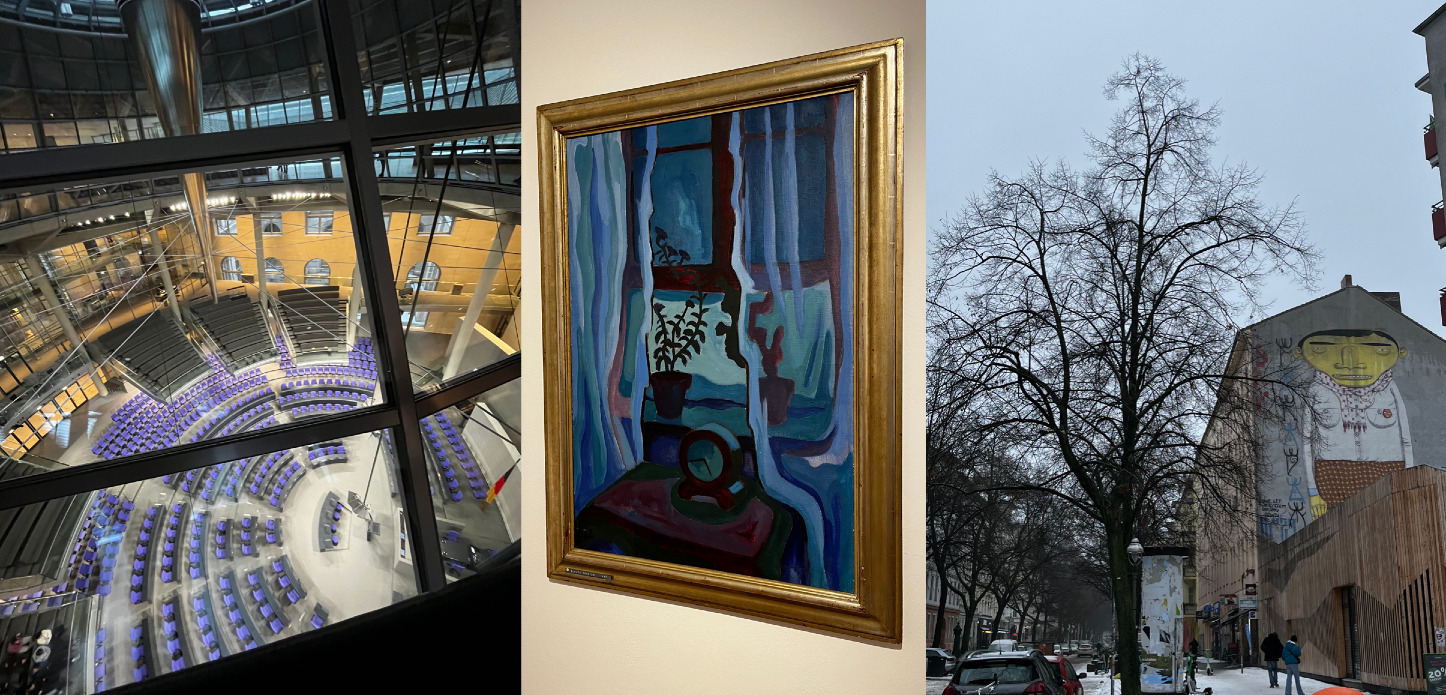
If you are planning a trip to Berlin one of these days, there surely is no shortage of activites.
I can recommend booking a free tour of the Reichstag for a behind-the-scenes
perspective on German politics 🏛, taking the bus to Dahlem to enjoy expressionist art at
the Brücke Museum 🎨, and strolling through the city with open eyes to discover gems like the Yellow Man mural by Brasilian street artists Os Gêmeos. 💚 💛 💙
11 Dec 2025
Under the motto Towards the New Era of Speech Understanding, this year’s
IEEE Automatic Speech Recognition and Understanding (ASRU) Workshop brought researchers together in Honolulu, Hawaiʻi.
🏝️
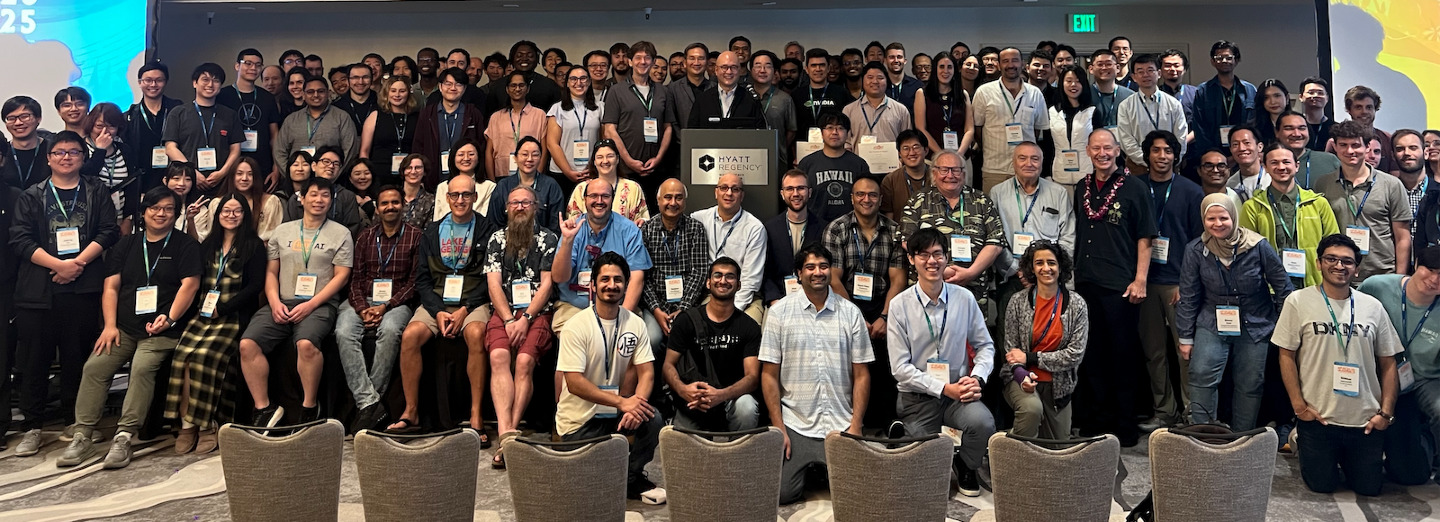
Together with Suyoun Kim (Amazon, USA), we had the exciting role of Student and Volunteer Chairs for the workshop.
We had the pleasure of working with a group of highly motivated students from the University of Hawaiʻi at Mānoa, who helped us make sure the workshop ran seamlessly.
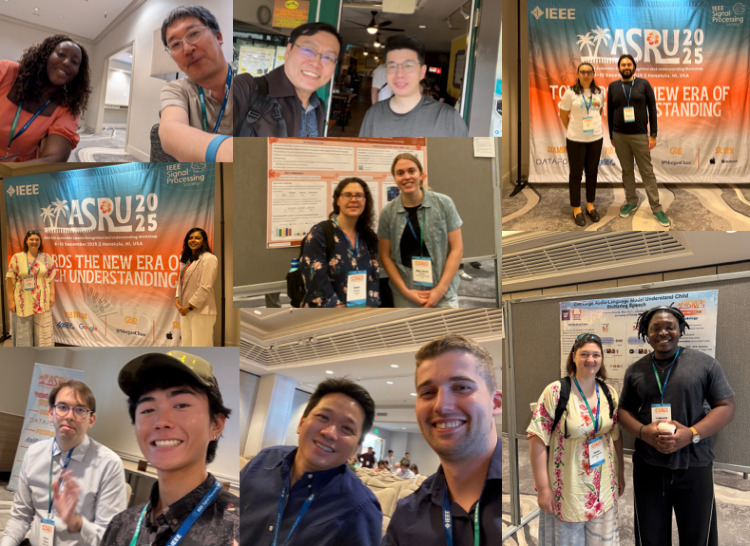
On top of that, we organized a mentoring program, bringing together early-career researchers and experienced mentors. Mentees shared that the meet-ups gave them valuable clarity on research directions and career paths, while mentors enjoyed fresh perspectives from the next generation of researchers. Some impressions from these meet-ups are shared below.
It was fantastic working alongside the tireless General Chairs, Bowon Lee (Inha University, Korea),
Kyu Han (Oracle, USA), and Chanwoo Kim (Korea University), whose dedication made the conference a success! Mahalo! 💛 💛 💛